Ugandan General Warns Military Leaders That Information Warfare Poses Major Security Threat
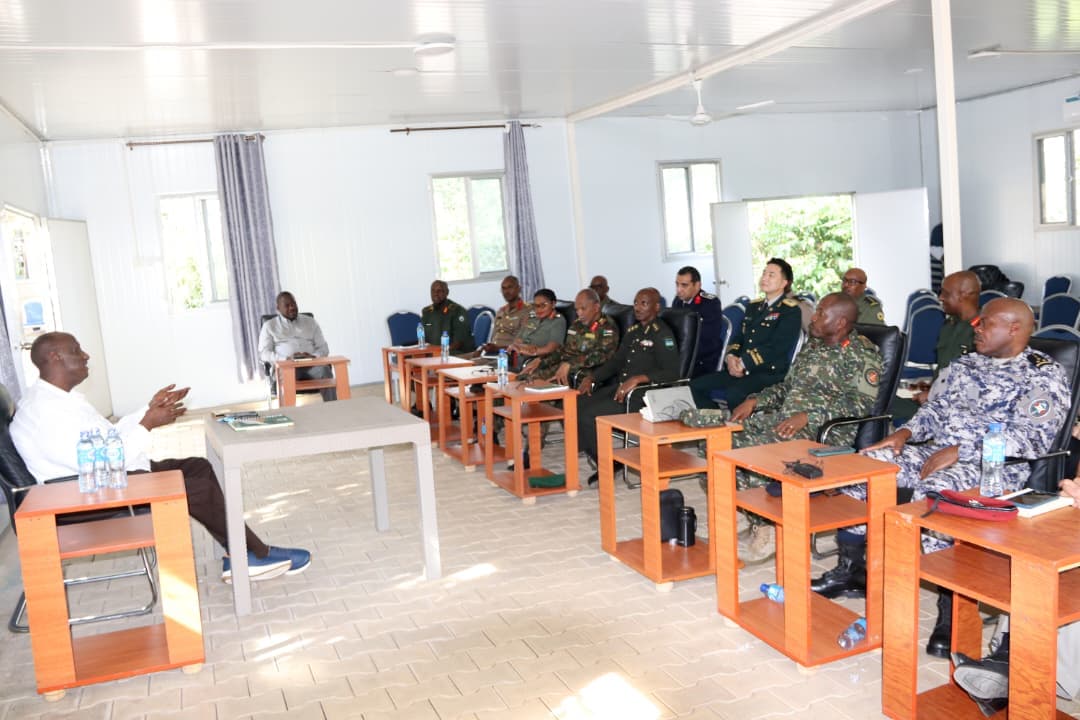
Senior Presidential Adviser Caleb Akandwanaho told defense attachés in Uganda that information warfare represents a critical challenge for modern militaries. He emphasized that armed forces must evolve beyond conventional warfare to address new forms of digital and psychological conflict.
Key Facts
- 1.Caleb Akandwanaho serves as Senior Presidential Adviser on Defence and Chief Coordinator of Operation Wealth Creation in Uganda
- 2.The briefing was delivered to Defence Attachés accredited to Uganda at Heritage Farm in Nakaseke
- 3.Akandwanaho identified information warfare as one of the major challenges facing modern armies
- 4.The discussion focused on military adaptation to emerging forms of conflict beyond traditional warfare
- 5.The meeting appears part of Uganda's broader military modernization and international engagement efforts
The Unbiased Take
This story lacks the specific policy disagreements or ideological divisions that typically generate liberal versus conservative debate. While information warfare is a legitimate security concern acknowledged across the political spectrum, the article provides insufficient detail about proposed responses, civil liberties implications, or resource allocation that would create meaningful partisan divisions. Without clearer policy prescriptions or controversial elements, this appears to be a straightforward military briefing rather than a politically divisive issue.
While information threats are real, expanding military capabilities to combat them risks militarizing information spaces and threatening press freedom. Democratic societies must ensure that anti-disinformation efforts don't become tools for suppressing political opposition or independent journalism.
- —Military involvement in information warfare can lead to domestic surveillance overreach
- —Anti-disinformation efforts often target legitimate political speech and journalism
- —Authoritarian governments frequently use 'information security' to justify censorship
- —Civilian oversight and transparency are essential for any information warfare capabilities
Information warfare represents a genuine national security threat that requires military preparedness and response capabilities. Adversaries are already weaponizing information to undermine democratic institutions and military effectiveness, making defensive measures essential.
- —Foreign adversaries actively use disinformation to weaken democratic societies and military readiness
- —Information warfare can influence elections, incite violence, and compromise national security
- —Military forces need specialized training and tools to operate effectively in information-contested environments
- —Failure to address information threats leaves nations vulnerable to hostile influence operations